Malay mee goreng vs Chinese mee goreng
I have a completely unscientific method for identifying Malay mee goreng.
Look for the limau nipis.
You know the type. Yellow noodles, slightly wetter, usually redder, a bit more sauce, cili, taugeh, sawi, egg, sometimes tofu or tomato or chopped kobis. Then somewhere at the side, one little piece of lime.
Melayu punya mesti ada limau nipis potong. 😂 Once you notice it, you cannot unsee it.
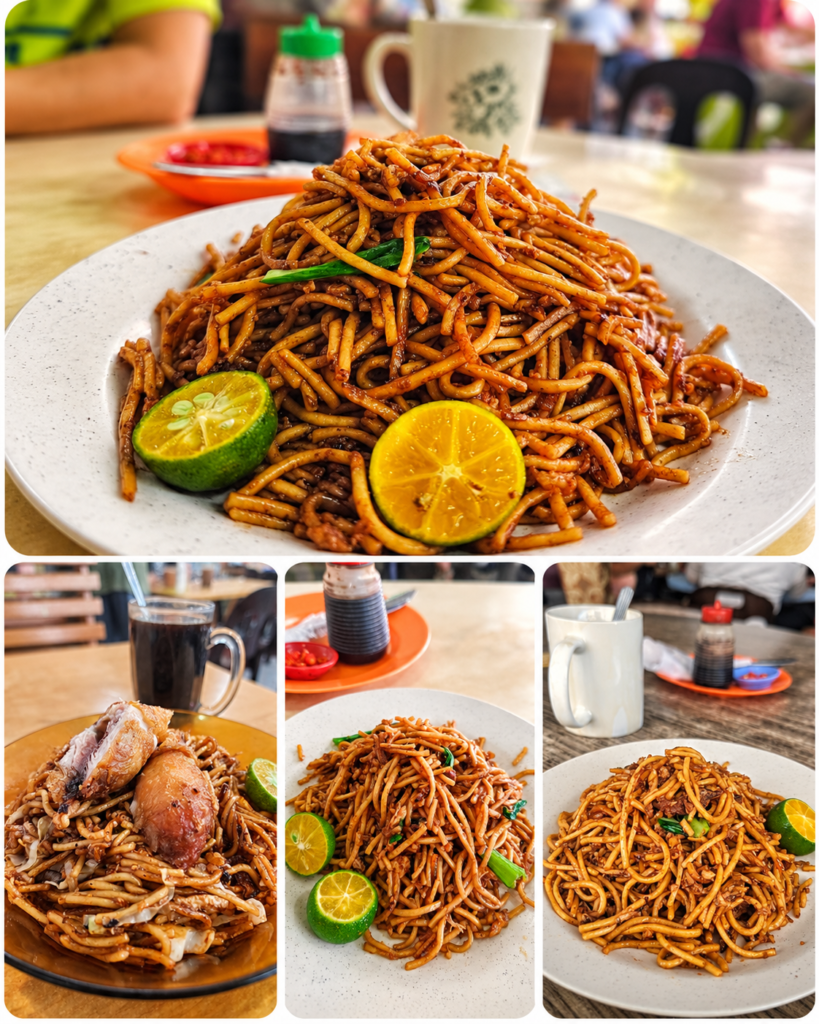
Malay mee goreng at Chong Choon Cafe, Kuching and Aik Seng, Sarikei. The only two places worth mentioning.
Chinese-style mee goreng usually looks and tastes a bit different. Drier, darker, fried harder, less garnish, and if the uncle knows what he is doing, a bit of that smoky wok hei. Oh, usually they will give you soy sauce with chopped chillis.
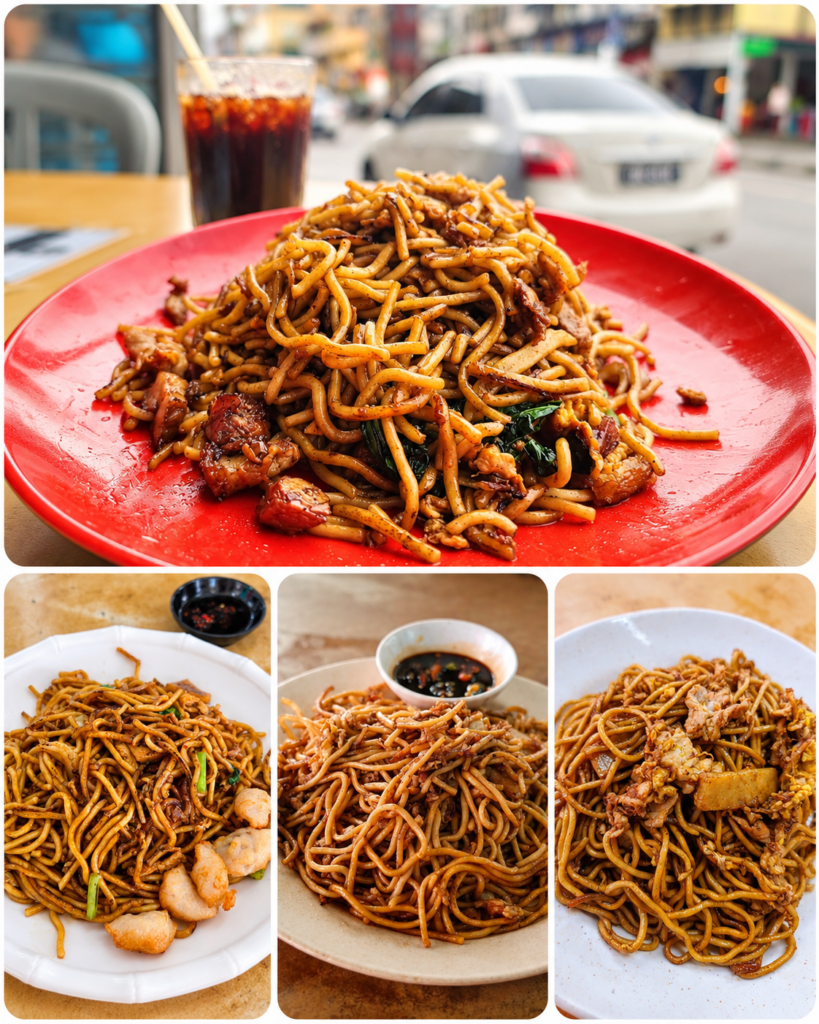
Chinese-style mee goreng from Sarikei, Lachau and Kuching.
Of course I am generalising. Before somebody starts a Malaysian food civil war in the comments, this is not some academic classification of mee goreng.
It is just one of those things you grow up eating often enough that you can look at a plate and immediately go, “Ah. Melayu punya.” Or, “Ah. Chinese shop punya.”
Both are mee goreng. Both can be bloody good. Both can also be terrible. There are really a lot of bad mee goreng. I always kena because I love trying the same menu at different places, especially new places. Most of the time, disappointment. 😔 It looks easy and simple, but not everyone can do a good mee goreng, in my book.
Bad mee goreng is remarkably democratic.
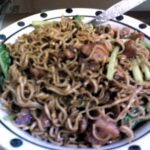
Apparently I have been thinking about fried noodles for quite a long time too. Back in 2006, I posted a photo of mee goreng I fried myself for dinner, wrote “Fried mee!! Yummy yummy….”, then spent the rest of the same post complaining about MSN Messenger.
Twenty years later I am still writing about mee goreng and complaining about technology.
Growth, yo!
Anyway, my very scientific conclusion remains the same: if the mee goreng comes with a piece of limau nipis, confidence level that it is Melayu punya immediately goes up to 87%.
Peer reviewed by nobody.